Lines That Took Longer Than Expected
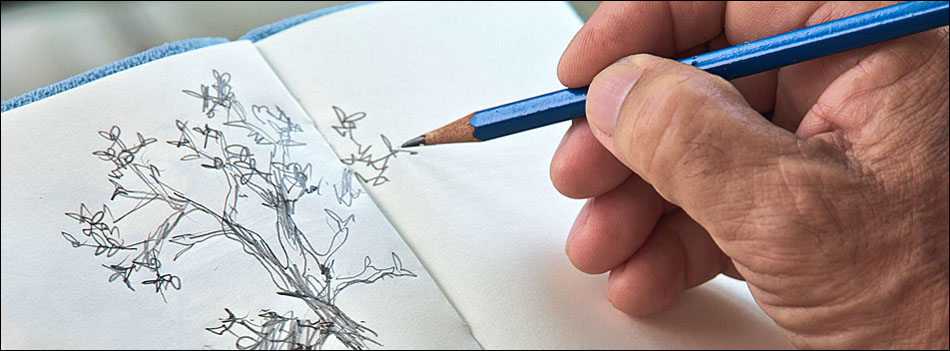
I spend most of my workday fixing problems I cannot see. Someone tells me their screen froze, or a program will not open, or something vanished after an update. I listen, ask questions, click around, and eventually the issue clears. When it works, there is nothing to look at afterward. No mark left behind. Just another ticket closed and another quiet confirmation email. After years of that, I started craving something physical. Something that stayed put when I stood up.
That is how I ended up sitting at my desk at night with a cheap sketchbook and a pencil I found in a drawer. Deciding to learn to draw felt strange in a way I had trouble explaining to anyone else. It felt like admitting I missed a step everyone else took without thinking. Like there was some basic skill I was supposed to pick up earlier in life and just never did. I told myself it did not matter, but it did. It sat there, heavy and uncomfortable, every time I opened the book.
The first things I tried were objects already around me. A coffee mug with a chipped rim. My mouse. A small desk lamp that hums when it warms up. I thought starting simple would help, but it mostly showed me how little I actually look at things. I kept drawing what I assumed was there instead of what my eyes were picking up. The mug leaned when it should not have. The lamp looked stiff and wrong. I erased more than I drew, and even then the page felt messy.
What bothered me most was not the mistakes. It was the pace. I am used to shortcuts. I am used to systems that respond quickly if you know where to press. Drawing did not care about any of that. Every line took time. Every correction meant starting again. I would catch myself rushing, trying to force the shape to appear faster, and the result always looked worse when I did that. It was annoying in a quiet, grinding way that stuck with me long after I closed the sketchbook.
At some point, I realized I was treating drawing like a task instead of an activity. I was trying to get to the finished thing as fast as possible, like the finished thing was the point. But the finished thing usually just showed me where I rushed. When I slowed down without planning to, usually because I was tired, the lines came out steadier. Not better exactly, just more honest. They matched what was in front of me instead of what I wanted to see.
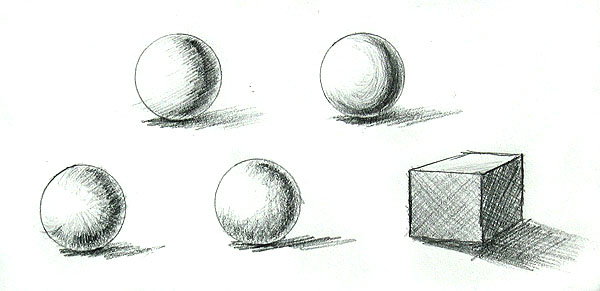
There was one night where I sat staring at the page for a long time before drawing anything. The room was quiet except for my computer fan, which I forgot to turn off. I remember thinking this was probably what people meant when they talked about patience, but I did not like it. I like progress you can measure. Drawing does not give you that easily. Some nights the page looks worse than the night before. That is hard to accept when you are used to things either working or not.
Still, I kept coming back to it. Part of that was stubbornness. Part of it was the fact that drawing was the only thing in my day that did not exist on a screen. When I sit down to practice, I am not optimizing anything. I am not fixing someone else’s problem. I am just trying to see better. That sounds simple, but it turns out it is not. I am slowly learning that learning to draw is less about talent and more about how willing you are to stay with discomfort without trying to skip ahead.
I do not know where this goes yet. Some pages are still embarrassing to look at. Others surprise me in small ways, like when a curve finally matches the object it came from. I am starting to suspect that the real work here is not the lines at all, but how quickly I want to give up when there is no shortcut. That part is harder to erase than pencil marks.
After a few weeks, I started noticing patterns in how I reacted to the page. I would open the sketchbook already annoyed, like I was bracing for something to go wrong. Some nights I barely sat down before thinking I should be doing something else instead. Checking email. Cleaning up files. Anything that came with a clear finish line. Drawing did not offer that. It just sat there, blank, waiting for me to decide what mattered enough to put down.
I kept telling myself I would feel better once I got past the awkward stage. Like there was some invisible checkpoint where things would suddenly click. That idea followed me around more than I expected. I do that with a lot of things. I assume the discomfort is temporary and that real progress lives somewhere just past it. What drawing showed me pretty quickly is that discomfort does not leave on its own. You either get used to it or you stop.
Some nights I worked on the same object for far longer than made sense. A stapler. The corner of my keyboard. A shoe kicked under the desk. I would adjust one line, then another, then another, until I could not tell if it was improving or not. My hand cramped. The pencil wore down unevenly. I kept thinking about how strange it was that something so basic could take so much attention. It made me feel both focused and foolish at the same time.
I started keeping the sketchbook open on my desk instead of putting it away. That small choice mattered more than I thought it would. When it was closed, it felt optional. When it was open, it felt unfinished. I would glance at it between work tasks, during long calls where I mostly listened, and feel that quiet tug to go back to it later. It became part of the room instead of a separate activity I had to convince myself to start.
There were nights when nothing came out right. I would draw for forty minutes and end up with a page I did not want to keep. I used to tear those pages out, but I stopped doing that. Now I leave them in. Flipping past them later is uncomfortable, but it also feels honest. Those pages show how uneven the process really is. Some days you move forward. Other days you circle the same mistakes and pretend you are learning something new.
One thing that surprised me was how physical drawing felt. I expected it to be mostly visual, but my body reacted before my eyes did. My shoulders tightened when I rushed. My breathing got shallow when I tried to force a shape. When I slowed down without thinking about it, usually late at night, my hand loosened. The lines softened. It was not dramatic, just noticeable enough to make me pause and wonder why I fought that feeling so hard.
I started reading about how people learn skills without really meaning to. Not tutorials, just stories from others who struggled through early stages. It helped a little, but mostly it confirmed something I already suspected. Learning to draw is less about collecting tips and more about staying present when nothing seems to be working. That is not a satisfying answer. It does not feel productive. But it keeps coming back to that same idea, whether I like it or not.
Sometimes I catch myself wanting to explain why my drawings look the way they do, even though no one is asking. I imagine showing them to someone and immediately offering excuses. I was tired. I rushed. I did not have the right pencil. Those explanations make me feel safer, but they also keep me from sitting with what is actually there on the page. Drawing has a way of exposing how quickly I reach for reasons instead of patience.
What keeps me coming back is not improvement in the usual sense. It is the feeling of being anchored to something real for a while. When I draw, I am not juggling messages or listening for notification sounds. I am watching a line appear because my hand made it appear. That sounds obvious, but after a full day of remote work, it feels almost unfamiliar. The page does not update itself. It waits.
I still get discouraged easily. I still wish there were clearer signs that I am doing this right. But I am starting to understand that the lack of shortcuts is the point. Every night I sit down with the sketchbook, I am choosing to stay with something that resists being optimized. That choice is uncomfortable, slow, and often frustrating, but it is also grounding in a way nothing else in my day really is.
I did not tell anyone I was drawing for a while. It felt easier to keep it to myself, like admitting it out loud would turn it into something I had to defend. When people ask what I do after work, I usually give a vague answer. I read. I mess around with stuff. Drawing felt too exposed to explain, especially since I did not have much to show for it. A stack of sketchbooks filled with half-finished attempts does not sound impressive when you say it out loud.
There is a strange vulnerability in trying something basic as an adult. You are supposed to already know how things work by now. When you do not, it feels like a personal failure instead of a normal gap. Sitting there with a pencil, struggling to capture the angle of a cup handle, I felt that pressure more than I expected. It was not about the cup. It was about feeling behind in a way I could not quite explain.
I noticed that I judge my drawings the same way I judge myself at work. If something takes too long, I assume I am doing it wrong. If I need to redo something, I get impatient. Drawing mirrors those habits back to me without any filter. The page does not care how efficient I want to be. It only shows me what I did. That honesty is uncomfortable, but it is also clear in a way most of my day is not.
There was one evening where everything felt off before I even started. Work had dragged on longer than usual. My eyes were tired. My head felt full. I almost skipped drawing entirely, but I sat down anyway and picked something simple. A spoon from the kitchen. I spent a long time just looking at it, reminding myself why I decided to learn to draw in the first place. The curve near the handle. The way it caught the light. When I finally drew it, the result was clumsy, but it felt earned. That mattered more than how it looked.
I am slowly learning that drawing is not something I can power through. When I try to force progress, the page pushes back. When I give myself permission to move slowly, things settle into place more often than not. I do not always like that tradeoff. It challenges the part of me that wants quick confirmation that I am improving. But it also quiets the constant urge to rush ahead of myself.
Some nights I flip back through earlier pages and feel a mix of embarrassment and relief. The drawings are rough. Proportions drift. Lines wobble. But I can also see moments where I paused instead of guessing. Those pauses matter. They show me where I actually looked instead of assuming. That is something I did not expect to carry over into other parts of my life, but it has. I notice details more now, even when I am not trying to.
I have stopped setting goals for how many pages I should fill or how often I should draw. Those kinds of rules made me treat the sketchbook like a checklist. Instead, I focus on showing up and staying with whatever feels possible that night. Sometimes that is a full page. Sometimes it is a few lines before I close the book again. Both count, even when it does not feel like it.
There is still a part of me that wants proof that this effort leads somewhere. I catch myself thinking about improvement in measurable terms. Cleaner lines. Better proportions. More confidence. Those things happen slowly, almost quietly, when I am not watching for them. When I chase them directly, they pull farther away. Drawing has made me confront how much I rely on external signals to feel competent.
Choosing to learn to draw has forced me to sit with uncertainty longer than I am used to. There is no clear timeline. No moment where someone tells you that you have passed the hard part. You just keep showing up, making marks, and deciding whether to keep going. That decision feels small each night, but it adds up. I am starting to trust that accumulation more than any single good drawing.
I still close the sketchbook some nights feeling frustrated. That has not gone away. What has changed is how long that frustration lasts. Instead of carrying it with me, I leave it on the page. The marks stay there. I move on. That separation feels healthy in a way I did not expect. It makes the effort feel contained, like something I can return to without it taking over the rest of my time.
At some point I started wondering if I was making things harder than they needed to be. Not in a dramatic way, just a quiet curiosity that showed up after another night of erasing the same corner of a drawing. I was still working alone, still guessing most of the time, and while that independence mattered to me, it also meant I had no frame of reference for whether my struggles were normal or self-inflicted.
One evening after work, I was already at my desk when the thought came up again. I had drawn the same object three times and each version felt off in a different way. Instead of closing the sketchbook, I opened a browser tab and searched around a bit. I ended up on a page about how people learn to draw, and I kept it open while I worked through another page. There were many suggestions that I found interesting. I followed them, made a few small adjustments. I found little things can really add up.
What surprised me was not that the drawing looked better. It did not, at least not in any obvious way. What changed was how I moved through it. I spent more time looking before touching the pencil to paper. I noticed angles instead of symbols. I stopped rushing to fix lines that felt wrong and let them sit for a moment. The page felt less like a problem to solve and more like something to stay with.
That small shift carried into the next few nights. I did not turn drawing into a research project, and I did not start following strict routines. I just allowed myself to check in occasionally when I felt stuck. One night I even clicked back to https://www.fanartreview.com/learn-to-draw.jsp while sketching a lamp, glanced at it briefly, and then kept going. It sat there quietly, like background noise, and that was enough.
I am careful not to lean too hard on outside guidance. Part of why I started drawing was to get away from constant inputs and instructions. Still, having something steady to reference now and then keeps me from spiraling when nothing feels right. It gives me permission to keep working instead of quitting early. That balance feels important, even if I am still figuring out where it sits.
The longer I do this, the more I notice how much of my frustration comes from expectation. I expect progress to look a certain way. I expect effort to pay off quickly. Drawing ignores those expectations completely. Some nights I do everything the same as the night before and get a worse result. Other nights something clicks without warning. There is no pattern I can rely on yet, and that unsettles me more than I like to admit.
I have started to think of the sketchbook less as a record of progress and more as a place where impatience shows itself. When I flip through it, I can see where I rushed, where I hesitated, where I tried to jump ahead. Those habits are familiar. They show up in other parts of my life too. Seeing them on paper makes them harder to ignore, but also easier to recognize without judgment.
There are evenings where I draw standing up because sitting feels too rigid. Other nights I work on the floor with the book balanced awkwardly on my knee. None of it is optimized. None of it needs to be. The more I let go of how drawing is supposed to look, the more room there is to actually do it. That freedom took longer to arrive than I expected.
I still struggle with confidence. I still hesitate before starting a new page. But the hesitation no longer feels like a warning sign. It feels like part of the process. A pause before committing. I am learning to respect that pause instead of fighting it. That might be the most useful thing drawing has taught me so far, even if it is not something I can measure.
Most nights end the same way. I close the sketchbook, put the pencil down, and feel a mix of relief and dissatisfaction. The relief comes from having stayed with something difficult. The dissatisfaction comes from knowing there is still so much I do not understand. Somehow those two feelings coexist without canceling each other out. That balance feels fragile, but real.
There are nights when I sit down and feel nothing at all. No motivation, no frustration, no curiosity. Just a kind of blank neutrality that mirrors the empty page. Those nights used to scare me because they felt like the beginning of giving up. Now I treat them differently. I draw anyway, not to produce something worth keeping, but to see what happens when I stop waiting for a feeling to show up first.
What usually happens is nothing dramatic. I sketch a few lines, erase them, redraw them. My mind wanders. I think about work tickets I forgot to close or emails I should have sent earlier. Slowly, almost without permission, my attention drifts back to the page. The object in front of me starts to matter again. The blankness fades into something quieter and more focused. It does not feel good exactly, but it feels stable.
I have started noticing how much I rely on momentum in other areas of my life. When things move smoothly, I feel capable. When they stall, I question everything. Drawing removes momentum entirely. Every session starts from zero. No matter how well the night before went, the page does not care. That reset is uncomfortable, but it is also honest. It asks me to show up without leaning on yesterday.
Sometimes I test myself by drawing the same object multiple nights in a row. A mug, a charger cable, the corner of my desk. I expect improvement, but what I get instead is variation. One night the shape feels right. The next night it feels stiff again. Instead of panicking, I have learned to accept that inconsistency as part of the process. It does not mean I am regressing. It means I am paying attention in different ways.
There was a point where I realized I was no longer trying to hide my sketchbook when someone came into the room. That change happened quietly. I did not decide it. I just stopped caring as much. The drawings are still rough, still unfinished, but they belong to me now. They are evidence of time spent staying with something difficult instead of avoiding it.
I still struggle with comparison, even when I tell myself not to. I see drawings online that look effortless and feel a familiar tightening in my chest. I remind myself that I do not know how long those people struggled or what their pages looked like early on. That reminder does not erase the feeling, but it keeps it from taking over. I return to my own page, my own pace.
The longer I keep this up, the more I see drawing as a kind of training ground for patience. Not patience in the abstract sense, but patience with myself. The kind that lets mistakes exist without needing immediate correction. The kind that allows confusion to sit for a while without turning into frustration. Choosing to learn to draw has made me confront how quickly I judge my own efforts when there is no clear payoff.
I am starting to trust that staying with the process matters more than chasing improvement. That trust feels fragile some nights, especially when the page fights me from the start. But it has held so far. Each time I sit down and work through the discomfort instead of stopping, it gets a little stronger. Not louder, not more confident, just steadier.
There are still evenings where I close the sketchbook early. I do not force myself to push past that point anymore. I have learned that stopping can be a choice instead of a failure. What matters is that I come back the next night. That return, over and over, feels like the real work, even if the drawings themselves never become anything impressive.
I do not know how long I will keep doing this. Maybe it will fade out eventually. Maybe it will become something I rely on more than I expect. For now, it is enough that drawing exists in my life as a place where I cannot rush, optimize, or skip ahead. It asks me to meet myself where I am, page after page, without offering shortcuts.
Lately I have been thinking less about improvement and more about continuity. Not in a goal-setting way, just noticing how drawing has settled into my evenings without much effort. It no longer feels like something I have to justify to myself. It is simply there, like a chair I pull out and sit in for a while before moving on with the rest of the night.
I still catch myself wanting reassurance. I still wish there were clearer signs that I am doing this correctly. But I am starting to recognize that those urges come from the same place as my impatience. They want certainty before effort. Drawing has not given me that, and somehow I am still here, still opening the sketchbook, still putting the pencil down on the page.
Some evenings I draw from memory just to see what happens. The results are usually strange and off, but they tell me something about how my mind fills in gaps when I stop looking closely. Other nights I sit with an object for a long time before making a mark. Both approaches feel valid now. I am less concerned with doing it right and more interested in staying present with whatever the page asks of me.
I have noticed that my tolerance for unfinished things has grown. Not just in drawing, but elsewhere too. I no longer feel the same pressure to resolve everything immediately, and I think that came from the patience I had to discover when I decided to learn to draw. There is comfort in letting something remain open, in trusting that returning to it later is enough. Drawing taught me that by refusing to cooperate with my usual need for closure.
The sketchbook itself has changed over time. The pages are worn. The corners are bent. There are smudges where my hand rested too long. I like those signs. They remind me that the book has been used, not curated. It is not a record meant for anyone else. It is proof that I showed up even when I did not feel confident.
When people ask what I have been doing lately, I sometimes mention drawing now. Not always, but more often than before. I do not explain it in detail. I do not frame it as a new identity or a major shift. I just say it is something I have been spending time on. That feels honest. It leaves room for the practice to grow or change without pressure.
There are still days when the slowness irritates me. When I wish I could skip ahead to competence and stop feeling like a beginner. Those days remind me why I started in the first place. I wanted something tangible. Something that resisted shortcuts. Choosing to learn to draw put me face to face with that resistance, and I am still learning how to stay with it.
I no longer expect drawing to fix anything about my life. It does not make work easier or frustration disappear. What it does is give me a place where effort looks different. Where progress is subtle. Where patience matters more than speed. That shift has been quiet, but it has stuck.
Most nights end the same way now. I close the sketchbook, set it back on the desk, and turn off the light. There is no big sense of accomplishment. Just a calm acknowledgment that I spent time doing something real. That feels enough. I do not need it to be more than that.
If there is a lesson here, it is not one I can sum up neatly. It lives in the repetition. In the pages that never quite turn out how I expect. In the decision to come back anyway. I am still easily discouraged. I am still quietly determined. Drawing did not change those things. It just gave them somewhere to exist without needing to be resolved.